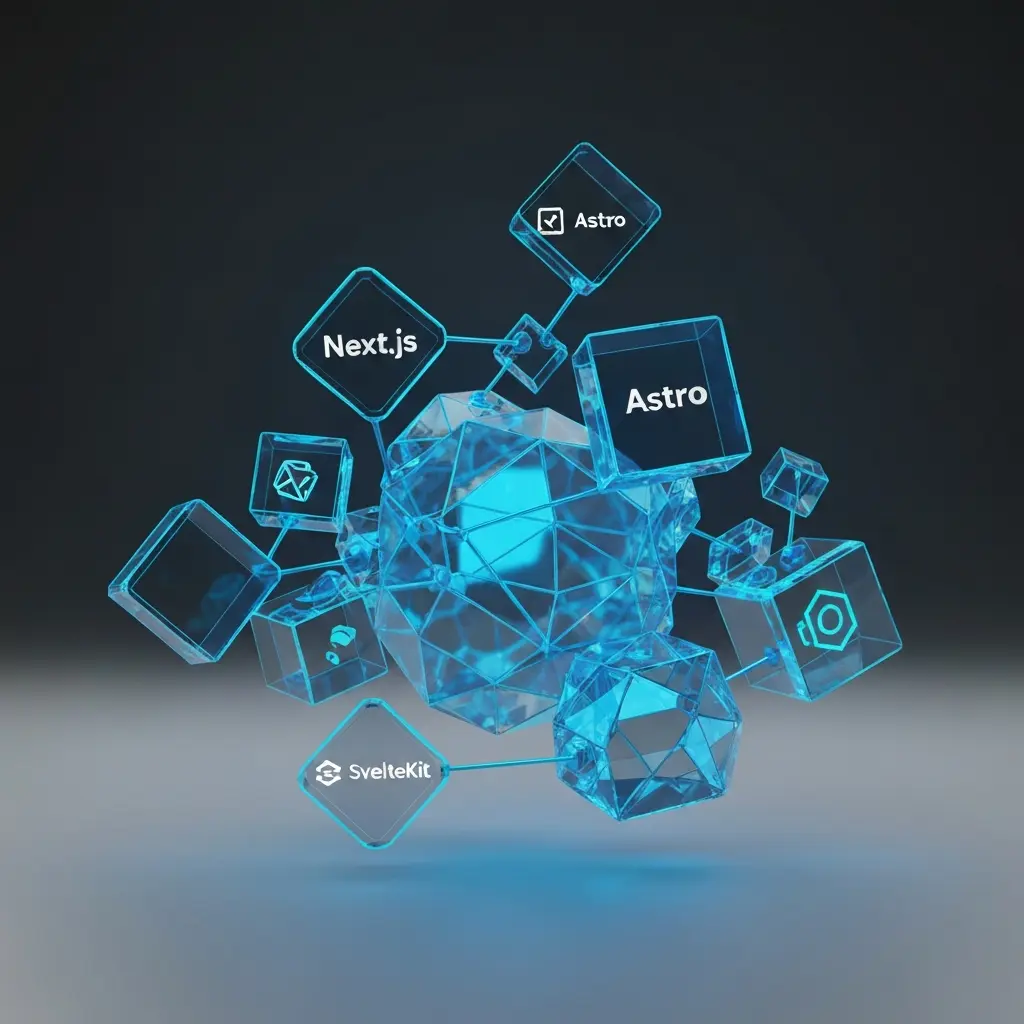
· Web Architecture · 6 min read
2026 Web Stack: Svelte 5.46 & Astro 6 Alpha Drive Edge-Native Evolution
Analysing the 2026 web stack shift, driven by Svelte 5.46's CSP hydration and Astro 6's Build Adapters, towards secure, AI-ready edge-native architectures.
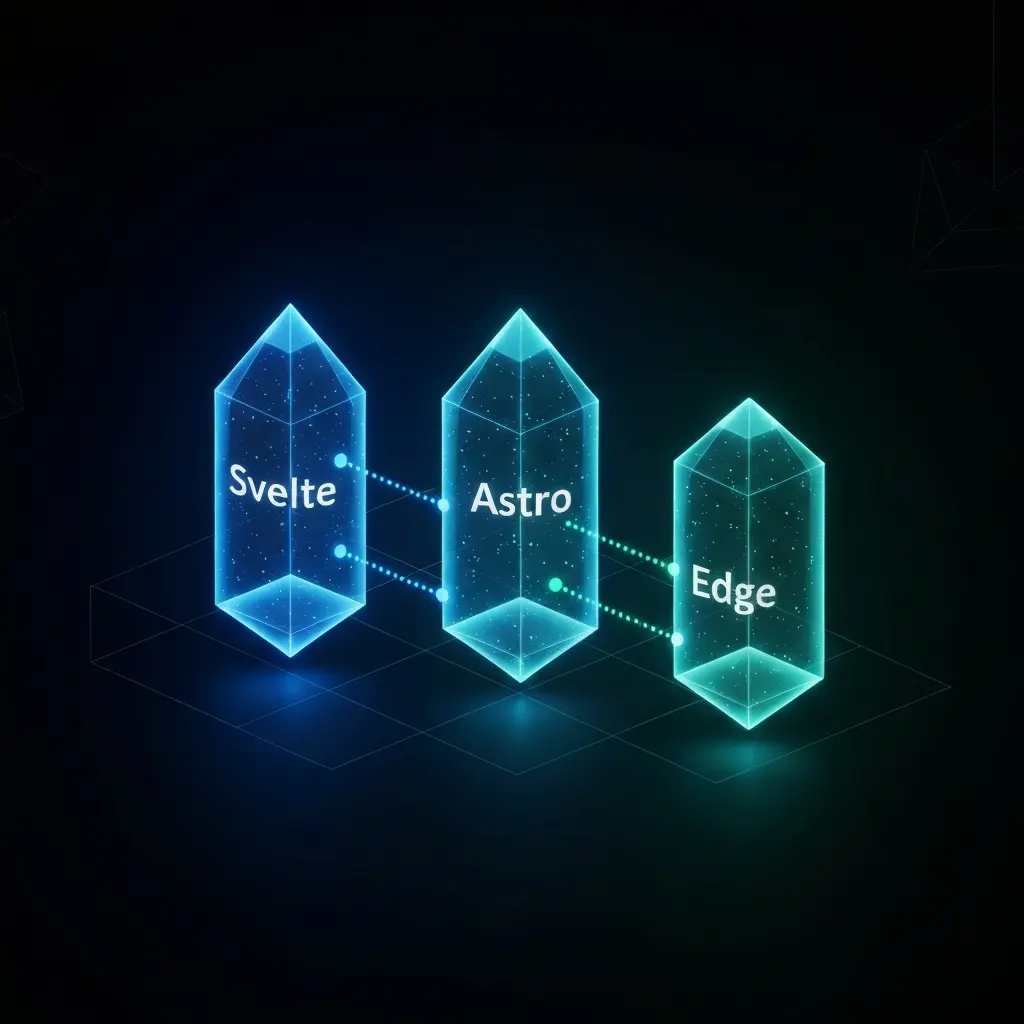
TL;DR: The 2026 web stack is pivoting decisively towards edge-native, AI-ready architectures. Key releases like Svelte 5.46, with hardened CSP hydration, and Astro 6 Alpha’s Build Adapters API enable programmatic, secure deployments. Coupled with Turbopack’s performance gains and MCP integration, this evolution prioritises security, developer velocity, and seamless AI collaboration.
Introduction
For years, modern web development has balanced the promise of dynamic, app-like experiences against the overhead of shipping ever-larger JavaScript bundles and complex hydration logic. The traditional model, centred on monolithic builds and client-side rendering, has struggled with performance bottlenecks and security complexities, particularly around Content Security Policies. The landscape is now shifting from merely ‘edge-compatible’ to truly Edge-Native Deployment. This architectural evolution, crystallised by early 2026 releases from Svelte and Astro, redefines the stack to be secure by design, programmatically adaptable, and intrinsically ready for AI-augmented development workflows. The focus is no longer just on where code runs, but on how it is assembled, secured, and maintained across a distributed system.
What is Edge-Native Deployment?
Edge-Native Deployment is an architectural paradigm where applications are designed, built, and optimised explicitly for execution on a globally distributed network of edge servers from the outset. It moves beyond retrofitting existing applications for the edge. Instead, it leverages framework-level APIs for programmatic build customisation, employs advanced hydration techniques compatible with strict security policies, and integrates deployment configuration directly into the development toolchain. The goal is to achieve minimal latency, robust security, and deterministic performance by treating the edge not as a deployment target, but as the foundational runtime environment.
The Security-First Hydration Imperative
A core challenge in isomorphic architecture has been aligning server-rendered HTML with client-side hydration scripts without compromising security. Strict Content Security Policies that forbid inline scripts have traditionally forced cumbersome workarounds. Svelte 5.46.0 addresses this directly by introducing a dedicated csp option for its hydratable directive. When enabled, the compiler automatically hashes inline <script> blocks, allowing them to be whitelisted in a script-src CSP directive.
This mechanism ensures that the integrity of hydration scripts is cryptographically verified, eliminating a common vector for injection attacks. Similarly, Astro 5.15’s Netlify Skew Protection tackles the version drift problem, ensuring client and server bundles remain synchronised post-deployment to prevent hydration mismatches. These features represent a maturation from frameworks that merely support SSR to those guaranteeing its security and reliability in production.
Pro Tip: When implementing Svelte’s new
cspoption, generate a nonce on the server for each request and pass it to the template. Use%sveltekit.assets%and%sveltekit.nonce%placeholders in yoursvelte.config.jsCSP headers for a dynamic, per-request security model.
// Example: SvelteKit configuration snippet for CSP nonce
import adapter from '@sveltejs/adapter-auto';
import { vitePreprocess } from '@sveltejs/vite-plugin-svelte';

/** @type {import('@sveltejs/kit').Config} */
const config = {
  preprocess: vitePreprocess(),
  kit: {
    adapter: adapter(),
    csp: {
      mode: 'nonce',
      directives: {
        'script-src': ['self', 'https://analytics.example.com']
      }
    }
  }
};

export default config;
Programmatic Builds and the Edge Toolchain
If 2025 was about adopting the edge, 2026 is about mastering it through programmability. The Astro 6 Alpha’s flagship feature, the Build Adapters API, grants unprecedented low-level control. For the first time, developers can programmatically manipulate fetch headers, rewrite asset paths, and customise processing behaviour during the static build or SSR output phase. This turns the build process into a flexible pipeline, essential for fine-tuning edge runtime behaviour and integrating with specialised backend services.
This trend extends to the Svelte CLI (sv v0.11.0), which now automates the setup for Cloudflare Workers and Pages, injecting configuration for D1 databases and environment secrets directly into the project. The seamless integration of deployment concerns into the development workflow signifies a shift towards a cohesive edge-native toolchain, reducing configuration complexity and accelerating setup times. The stabilisation of Next.js 15.2’s Streaming Metadata, which allows the page shell to render while dynamic metadata fetches, further exemplifies the push for smarter, non-blocking build and render processes.
Why Does Performance Now Include AI?
Performance metrics are expanding beyond compile times and Lighthouse scores to encompass developer velocity and AI collaboration efficacy. Turbopack’s early 2026 benchmarks, showing up to 57.6% faster compiles on large routes, directly attack the feedback loop, a critical metric for team productivity. Simultaneously, the integration of the Model Context Protocol (MCP) with Svelte (mcp@0.1.16) redefines toolchain performance.
This integration allows AI coding agents to programmatically query a project’s component hierarchy, dependency graph, and configuration. An AI assistant can now understand a codebase’s structure before suggesting changes, moving from generic code completion to architecturally-aware recommendations. When combined with Node.js 24 support in adapters (like SvelteKit’s Vercel adapter v6.2.0), which leverages the latest V8 optimisations for faster cold starts, the entire development lifecycle—from initial idea to deployed edge function—is being accelerated.
Pro Tip: Utilise the MCP server’s query capabilities to create custom documentation or audit scripts for your Svelte project. You can programmatically generate visual maps of component data flows, identifying potential optimisation points or breaking change risks during upgrades.
The 2026 Outlook
We anticipate the consolidation of these trends into a new standard for enterprise-grade web applications. Frameworks will increasingly ship with built-in, zero-configuration support for multiple edge providers, abstracting away the remaining infrastructural differences. The Build Adapters API concept will likely be adopted elsewhere, leading to a ecosystem of composable build plugins for edge-specific optimisations like regional asset bundling. Furthermore, AI protocol integrations will become as standard as TypeScript support, with frameworks exposing structured project context as a first-class API. The result will be stacks that are not only faster and more secure but also more intelligently assembled and maintained.
Key Takeaways
- Adopt CSP-compatible hydration: Utilise Svelte 5.46’s
cspoption or similar mechanisms to eliminate inline script vulnerabilities and enable strict CSP policies without workarounds. - Leverage programmatic build APIs: Explore Astro 6’s Build Adapters API to customise asset handling and headers, essential for fine-tuning edge runtime behaviour and performance.
- Integrate deployment into development: Use enhanced CLI tools, like the Svelte CLI for Cloudflare, to automate edge configuration and reduce environment setup friction.
- Benchmark with Turbopack: Evaluate build tooling on large, realistic project routes to quantify improvements in developer feedback loops, not just initial page load.
- Prepare for AI-augmented development: Consider how MCP-like protocols will allow AI tools to understand your project structure, shifting their role from code writers to architectural assistants.
Conclusion
The 2026 web stack evolution, signalled by Svelte 5.46 and Astro 6 Alpha, marks a decisive turn towards mature, production-ready edge-native development. It is a move from experimentation to engineering, prioritising security through CSP-compatible hydration, control through programmatic builds, and velocity through AI-aware toolchains. This is no longer about chasing marginal gains in rendering speed, but about architecting systems that are secure, adaptable, and efficient across their entire lifecycle. At Criztec, we help clients navigate this shift by implementing these advanced patterns, ensuring their frontend architecture is resilient, performant, and strategically aligned with the edge-native future.
For further reading, consult the official Svelte 5.46.0 Release Notes and the Astro Build Adapters API Documentation.