
The 2026 Runtime Fidelity Shift in Next.js 16 & Astro 6
The 2026 'Runtime Fidelity' shift sees Astro 6 and Next.js 16 unifying dev and production engines to eradicate 'works on my machine' bugs.
Jan 15, 2026
Web ArchitectureThe 2026 'Runtime Fidelity' shift sees Astro 6 and Next.js 16 unifying dev and production engines to eradicate 'works on my machine' bugs.

Leading frameworks like Astro 6, Next.js 16, and SvelteKit have fundamentally shifted from component-centric to agent-native architectures in 2026, powered by the Model Context Protocol.

An architectural deep dive into how Astro 6 Beta and Next.js 16, with their focus on edge runtime parity and component-level caching, are redefining modern web development.

Explore how Next.js 16's granular Cache Components and Astro 6.0's AI-native ecosystem are redefining server-side rendering and developer experience in 2026.

Technical analysis of January 2026 framework releases: Next.js 16.1, Astro 5.16, and SvelteKit 2.49 leverage WebAssembly and compiler optimisations to achieve significant performance gains in boot times, LCP, and INP metrics.

The 2026 stack eliminates manual memoisation and ISR tuning. Next.js 16 Cache Components, Astro 6 Server Islands, and the stable React Compiler herald a new era of compiler-driven optimisation.

Next.js 15.2 and Astro 5.2 signal a paradigm shift toward high-performance, post-response background processing and native Vite-first styling architectures.
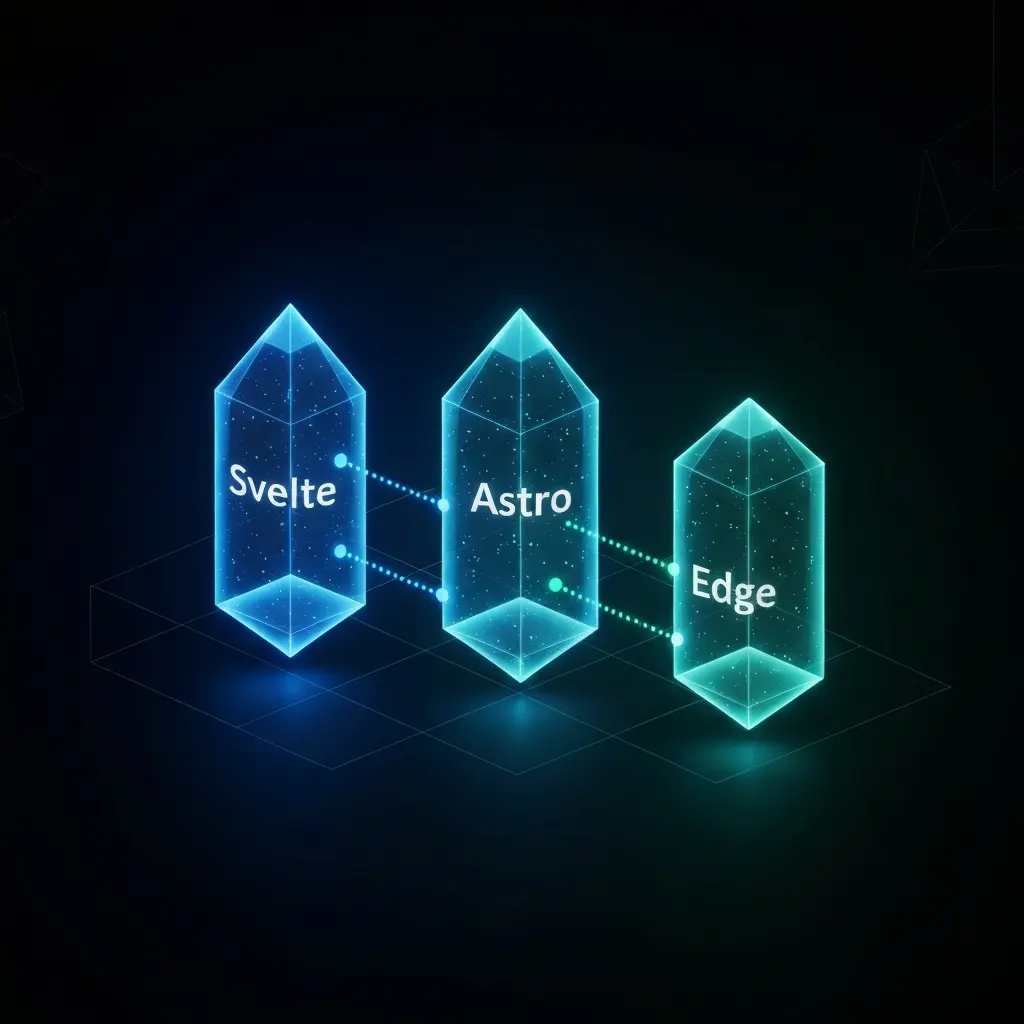
Analysing the 2026 web stack shift, driven by Svelte 5.46's CSP hydration and Astro 6's Build Adapters, towards secure, AI-ready edge-native architectures.

2026 has begun with a major architectural convergence: Next.js, Astro, and SvelteKit now share AI-first features and unified serverless runtimes, fundamentally changing web development.