· Web Architecture · 6 min read
Edge-Native Dominance: Astro 6 & Next.js 16.1 Redefine 2026 Web Stacks
The Cloudflare-Astro merger and Next.js 16.1's innovations herald an architectural shift towards frameworks inseparable from their edge runtime, making edge-native the default.

TL;DR: The Cloudflare acquisition of Astro and the release of Next.js 16.1.3 signal a decisive architectural pivot. Frameworks are no longer runtime-agnostic but are becoming intrinsically designed for specific edge environments like
workerd. This edge-native architecture delivers deterministic local-to-production parity, millisecond-granular caching, and automated enterprise security, fundamentally altering how we build for the web.
For years, the prevailing architectural wisdom separated the web framework from its deployment target. Developers built with tools like Next.js or Astro locally, often targeting Node.js, before deploying to various platforms—serverless, edge, or traditional servers. This abstraction created a ‘works on my machine’ chasm, where subtle differences in runtime APIs, security models, and performance characteristics led to unpredictable production behaviour. The announcements of 16th January 2026 dismantle this model entirely.
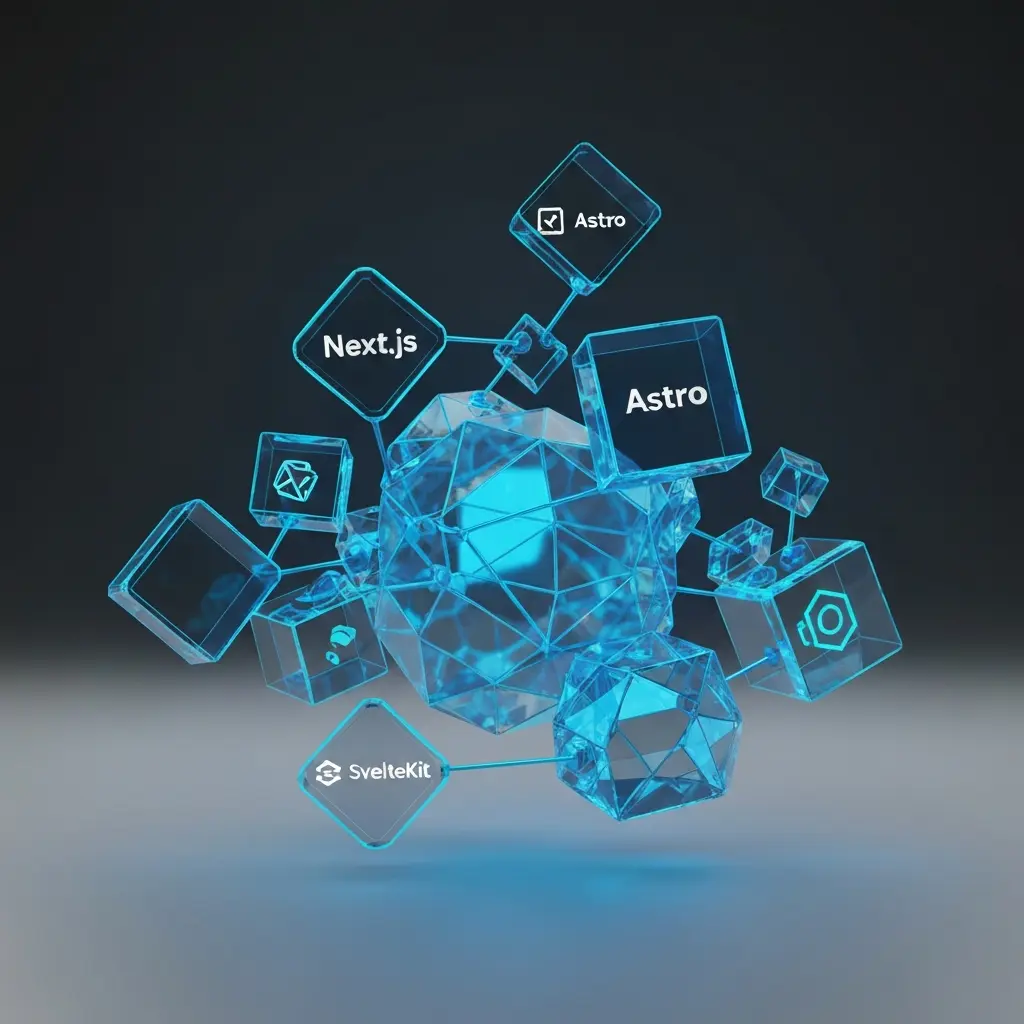
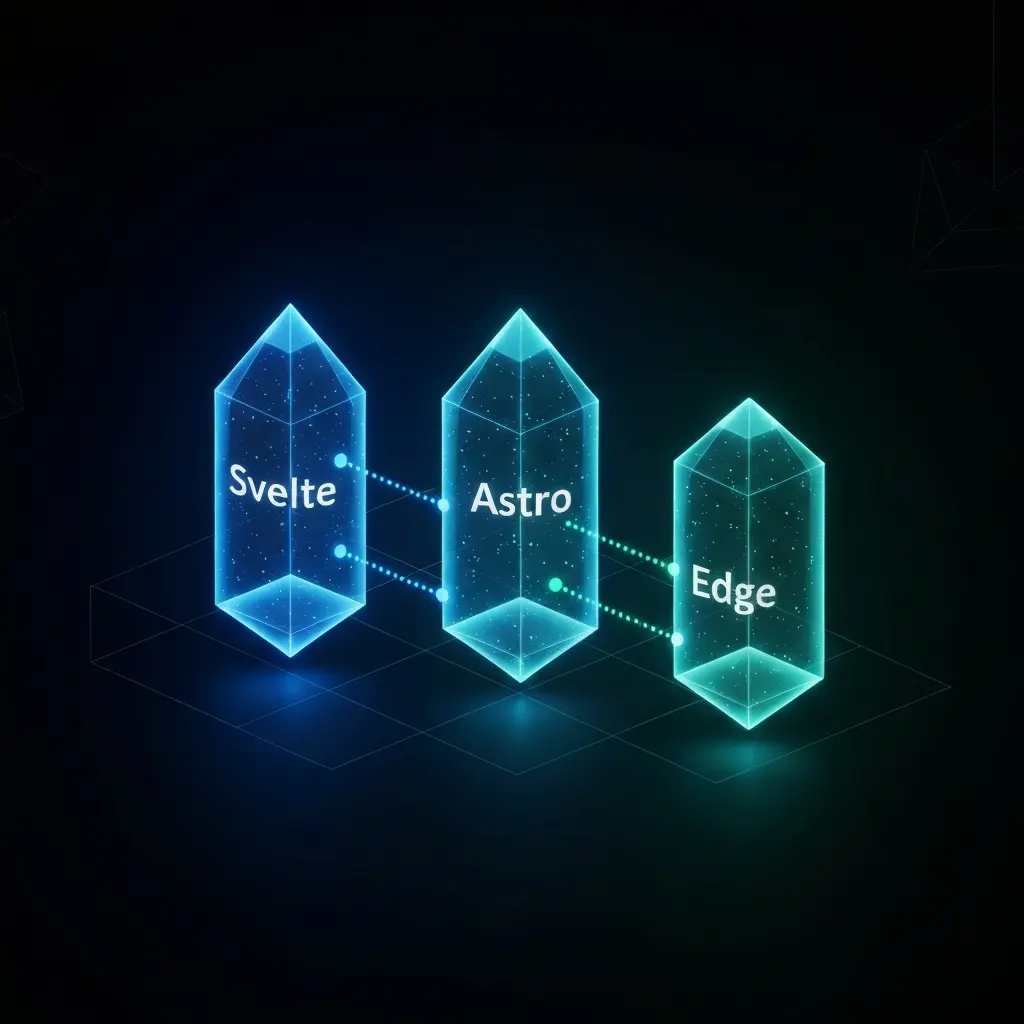
The merger of Cloudflare and Astro, alongside pivotal updates in Next.js 16.1.3 and Svelte 5.46, formalises a new paradigm: the edge-native architecture. Here, the framework and its runtime environment are co-designed, creating an inseparable, optimised unit. This shift moves us from deploying to the edge to developing for a specific edge from the first line of code, promising unprecedented consistency, performance, and control.
What is Edge-Native Architecture?
Edge-native architecture is a development paradigm where a web framework is fundamentally designed and tightly integrated with a specific, globally distributed edge runtime. Unlike traditional models that treat the runtime as an interchangeable deployment target, an edge-native framework’s core APIs, development server, and build tooling are built atop and for that runtime’s unique capabilities. This ensures absolute parity between local development and global production, turning the edge from a deployment location into the foundational development environment itself.
The End of Runtime Abstraction: Local-to-Edge Parity
The most significant technical advancement in this shift is the eradication of the local/production divide. Astro 6’s open beta, released concurrently with the Cloudflare acquisition, achieves this via its new development server. It leverages the Vite Environments API to execute code directly within workerd—the same JavaScript/Wasm runtime that powers Cloudflare Workers—on a developer’s local machine.
This means the fetch, caches, KV, and D1 APIs you test against locally are precisely those available at the edge. There is no polyfilling or simulation; you are running production code in the production runtime from day one. The business value is clear: it eliminates a major class of deployment failures, reduces environment-specific debugging, and accelerates developer onboarding by providing a single, authoritative environment.
Pro Tip: When using the new Astro dev server, configure your
wrangler.tomllocally to point to a test namespace for bindings like KV or D1. This allows you to develop with real, isolated data without affecting production resources.
// Astro 6 + workerd: Local code uses exact edge runtime APIs
// This `context.waitUntil` and `caches.default` are identical locally and globally.
export const prerender = false;

export async function GET({ request, platform }) {
  const cache = caches.default;
  let response = await cache.match(request);

  if (!response) {
    response = await fetch('https://api.example.com/data');
    const newHeaders = new Headers(response.headers);
    newHeaders.set('Cache-Control', 's-maxage=10');
    response = new Response(response.body, { ...response, headers: newHeaders });
    platform.context.waitUntil(cache.put(request, response.clone()));
  }
  return response;
}
Granularity in Performance: Beyond Route-Level Caching
While Astro solidifies the development environment, Next.js 16.1.3 redefines production performance dynamics with its stabilised ‘Cache Components’ feature. The 'use cache' directive moves caching logic from the rigid, page-or-route-level model to individual React components. This allows for millisecond-granular revalidation strategies scoped to specific data dependencies within a page.
Consider a product page: the product title component could be cached indefinitely, the price component revalidated every 5 seconds, and the inventory component revalidated on-demand via a server action. This granularity, documented in the Next.js 16.1 RFC, enables architects to model caching against business data volatility, not technical route boundaries. The result is higher effective cache hit rates, reduced backend load, and faster dynamic content updates.
Why Does Automated Security Compliance Matter?
Enterprise adoption hinges on security, and manual security header management is a notorious bottleneck. Svelte 5.46 addresses this directly for edge-native applications. Its updated hydratable renderer now includes a native csp (Content Security Policy) option. When enabled, it automatically generates and manages cryptographic nonces for inline scripts, a critical requirement for strict CSP directives like script-src 'self' 'nonce-...'.
This automation ensures that the hydration scripts essential for Svelte’s interactivity comply with stringent security policies without developer intervention. For teams operating in regulated industries or aiming for high-security benchmarks, this feature transforms CSP from a complex, build-time configuration challenge into a simple framework toggle, seamlessly integrating strong security into the edge-native development workflow.
The Infrastructure-Aware Development Agent
A subtler but profound change is the stabilisation of Model Context Protocol (MCP) support in both Astro 6 and Next.js 16. MCP provides a standardised interface for AI coding assistants to securely read a project’s real-time context—file structures, environment variables, framework configuration, and now, critically, edge runtime metadata.
This means an AI agent can understand that a project uses Cloudflare’s D1 database and the workerd Cache API. It can then suggest authentic code snippets, optimisations, and refactoring specific to that environment. MCP turns AI from a generic code generator into an infrastructure-aware development partner, drastically lowering the cognitive load of adopting new edge-native primitives and patterns.
The 2026 Outlook: Specialisation and Vertical Integration
The trajectory for 2026 is clear: the era of the generic, runtime-agnostic meta-framework is ending. We will see increased specialisation, where frameworks optimise deeply for their host platform’s unique strengths—be it Cloudflare’s network, Vercel’s speed, or another provider’s AI accelerators. The ‘edge’ will cease to be a monolith, with frameworks exposing differentiated APIs for specific global data, AI, or real-time sync services.
Vertical integration will deepen, with framework companies offering tightly coupled hosting, observability, and AI tooling. The competition will shift from feature lists to the quality of the holistic developer experience and the performance characteristics of the entire integrated stack, from local dev command to global edge deployment.
Key Takeaways
- Edge-native architecture prioritises deep integration with a specific runtime, making local development identical to production and eliminating environment-specific bugs.
- Next.js 16.1’s component-level caching allows performance strategies to be modelled on business logic, enabling millisecond-granular revalidation for different parts of a page.
- Svelte 5.46’s automated CSP nonce management bakes enterprise-grade security compliance directly into the framework, reducing a significant operational burden.
- The Model Context Protocol (MCP) elevates AI assistants from generic coders to context-aware partners that understand your specific edge runtime and project structure.
- Architectural decisions in 2026 will increasingly involve choosing a cohesive, vertically integrated stack (framework + runtime) rather than assembling disparate, interoperable parts.
Conclusion
The developments of January 2026 are not merely incremental updates; they represent a foundational recalibration of frontend architecture. By fusing framework and runtime, the industry is trading the flexibility of abstraction for the power, predictability, and performance of a unified system. This edge-native model reduces complexity for developers while delivering faster, more secure, and globally consistent experiences for users. At Criztec, we are guiding our clients through this architectural transition, helping them evaluate these integrated stacks and implement patterns that leverage deterministic edge behaviour for competitive advantage.